Instagram Algorithm 2026: Complete Guide
Introduction
More than 2 billion people use Instagram every month, making it one of the most competitive social platforms for creators and businesses. In 2026, simply posting photos and Reels is not enough. Understanding the Instagram Algorithm 2026 and applying modern Instagram SEO techniques are essential if you want your content to appear in search results, Explore pages, and recommendations.
Many creators struggle with declining reach and inconsistent engagement. The reason is simple: Instagram now behaves like a search engine.
Keywords, user intent, watch time, and audience interaction determine whether your content gets visibility.
In this guide, you’ll learn:
- How the Instagram Algorithm 2026 works
- The latest Instagram SEO strategies
- Common mistakes that reduce reach
- Practical optimization tips for creators and businesses
- How niche professionals, including data analysts, can use Instagram SEO for personal branding
Quick Answer: What is Instagram Algorithm 2026?
Instagram Algorithm 2026 is Instagram’s AI-driven ranking system that determines which posts, Reels, Stories, and accounts users see based on relevance, engagement signals, watch time, search intent, and content quality.
Instagram SEO helps creators optimize their profiles and content so the algorithm can understand and recommend them to the right audience.
How Does the Instagram Algorithm 2026 Work?
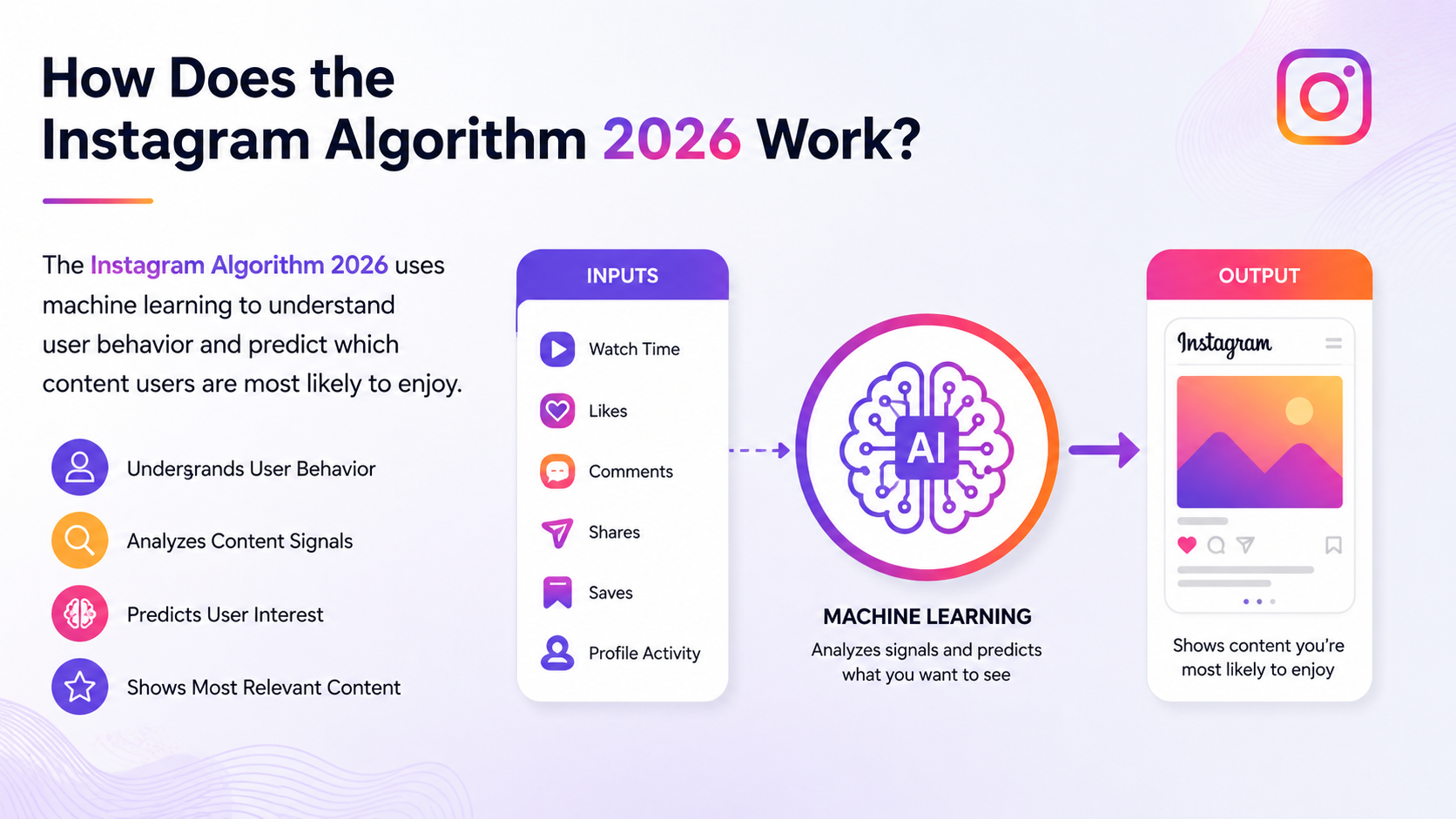
The instagram algorithm 2026 uses machine learning to understand user behavior and predict which content users are most likely to enjoy.
Key Ranking Signals
| Ranking Factor | Importance |
|---|---|
| Watch Time | Very High |
| Saves | Very High |
| Shares | Very High |
| Comments | High |
| Profile Visits | High |
| Keyword Relevance | High |
| Posting Consistency | Medium |
| Hashtags | Medium |
Instagram prioritizes content that keeps users on the platform longer.
Example:
If users watch your Reel completely and share it with friends, Instagram sees the content as valuable and increases its reach.
Why Instagram SEO Matters in 2026
Instagram is no longer only a social media platform. It has become a search engine where users search for:
- Marketing tips
- Local businesses
- Educational content
- Career guidance
- Personal brands
Today, people search for terms such as:
- How to become a data analyst
- Learn data analytics
- Data analyst roadmap
- Data analytics career path
Creators targeting these topics can rank on Instagram by optimizing captions, keywords, and profile information.
Instagram SEO helps:
- Increase organic reach
- Improve discoverability
- Generate leads
- Build authority
- Grow followers without ads
10 Proven Instagram SEO Strategies for 2026
1. Optimize Your Profile Name
Include searchable keywords.
Example:
John Sharma
John Sharma | Data Analyst & Instagram Growth Mentor
This helps Instagram understand your expertise.
2. Use Keywords in Captions
Instagram now reads captions similarly to Google.
Instead of:
“New post is live.”
Write:
“Here is my complete data analyst roadmap and how to become a data analyst in 2026.”
Natural keywords improve search visibility.
3. Add Keywords in Alt Text
Instagram uses Alt Text to understand images.
Example:
“Infographic explaining data analytics skills and Instagram SEO strategies.”
4. Focus on Saves and Shares
Saves and shares are among the strongest ranking signals in the instagram algorithm 2026.
Create:
- Checklists
- Templates
- Step-by-step guides
- Educational carousels
5. Create Searchable Reel Titles
Examples:
- Instagram SEO Guide 2026
- Learn Data Analytics and Build Your Brand on Instagram
- Data Analytics Projects for Beginners
Clear titles improve discoverability.
6. Post Consistently
Recommended frequency:
- 4–5 Reels weekly
- 2 Carousel posts weekly
- Daily Stories
Consistency builds algorithm trust.
7. Use Keyword-Rich Hashtags
Instead of generic hashtags:
#viral
Use:
#InstagramSEO
#InstagramAlgorithm2026
#DataAnalystRoadmap
#LearnDataAnalytics
8. Create Niche Authority
Instagram rewards topic consistency.
Example niches:
- Business growth
- Instagram marketing
- Data analytics skills
- Data analytics projects
- Personal branding
Stay focused on one expertise area.
9. Encourage Meaningful Engagement
Ask questions:
- What is your biggest Instagram growth challenge?
- Which data analytics career path interests you most?
Comments increase visibility.
10. Improve Watch Time
The first three seconds determine success.
Use:
- Strong hooks
- Fast pacing
- Captions
- Pattern interruptions
Common Mistakes That Hurt Instagram SEO
Many creators unknowingly reduce their reach.
Common Mistakes in Data Analytics and Instagram Growth
The same way beginners make common mistakes in data analytics, creators also make optimization mistakes.
Data Analytics Mistakes and Instagram Lessons
| Data Analytics Mistakes | Instagram Equivalent |
|---|---|
| Ignoring data | Ignoring Insights |
| Wrong metrics | Focusing only on likes |
| No strategy | Random posting |
| No audience research | Poor targeting |
Data Analyst Beginner Mistakes Applied to Instagram
- Posting without keyword research
- Using irrelevant hashtags
- Ignoring audience intent
- Not analyzing performance data
- Chasing trends without strategy
Successful creators use data before making decisions.
How Professionals Can Use Instagram SEO
Instagram is becoming a professional discovery platform.
Professionals searching for:
- Data analyst roadmap
- Learn data analytics
- Data analytics career path
- Data analytics skills
- Data analytics projects
often discover educational creators on Instagram.
Example Strategy
A data analyst can post:
- Beginner learning roadmap
- Portfolio project ideas
- Career tips
- Interview preparation
- Industry trends
These searchable topics attract highly targeted followers.
Instagram SEO Checklist for 2026
Profile Optimization
Keyword in name
Keyword-rich bio
Clear profile category
Professional profile photo
Content Optimization
Keyword in captions
SEO-friendly Reel titles
Alt text optimization
Save-worthy content
Engagement Optimization
Reply to comments
Encourage shares
Use polls and questions
Build community
Technical Optimization
Analyze Insights weekly
Track watch time
Track saves and shares
Refresh old content
Future Trends of Instagram Algorithm 2026
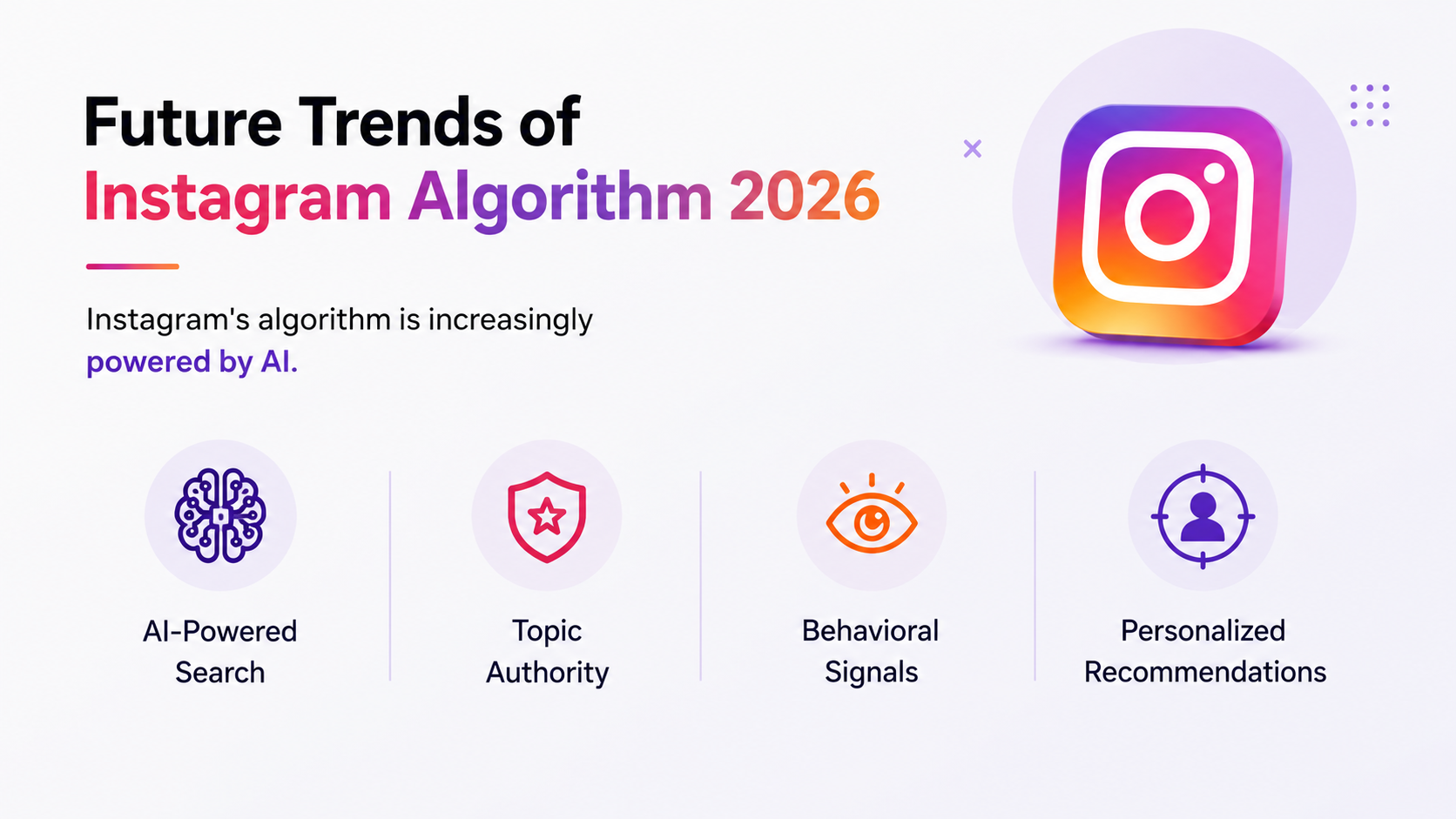
Instagram’s algorithm is increasingly powered by AI.
Key trends include:
AI-Powered Search
Instagram understands intent instead of exact keywords.
Topic Authority
Accounts with expertise receive more recommendations.
Behavioral Signals
Watch time and shares matter more than follower count.
Personalized Recommendations
The platform creates unique feeds for each user.
Creators who focus on quality and relevance will grow faster than those relying on shortcuts.
Conclusion: Instagram Algorithm 2026
The instagram algorithm 2026 rewards creators who understand search intent, provide valuable content, and build audience trust.
The biggest takeaways are:
- Optimize for keywords, not just hashtags.
- Prioritize saves, shares, and watch time.
- Create content around clear topics and expertise.
- Use Instagram as a search engine and branding platform.
- Analyze data regularly and improve based on insights.
Whether you are a business owner, creator, or professional building a personal brand around topics like data analyst roadmap, learn data analytics, or data analytics career path, Instagram SEO can help you reach the right audience organically.
Start optimizing today, and the Instagram Algorithm 2026 can become a growth opportunity instead of a challenge.
FAQs
1. What is Instagram Algorithm 2026?
Instagram Algorithm 2026 is an AI-based system that ranks content based on relevance, engagement, watch time, and search intent.
2. Does Instagram SEO work in 2026?
Yes. Instagram SEO significantly improves discoverability and organic reach.
3. Are hashtags still important?
Yes, but keywords and content relevance now matter more than hashtags.
4. How often should I post on Instagram?
Most creators benefit from posting 4–5 Reels and 2 carousels per week.
5. What is the most important ranking factor?
Watch time, saves, and shares are currently the strongest ranking signals.